What is a Backup Power System?
A backup power system is equipment and infrastructure that automatically supplies electricity to critical loads when the primary utility connection fails or is interrupted. It can include diesel generators, uninterruptible power supplies (UPS), battery energy storage systems (BESS), or combinations of these technologies, sized and configured to maintain operations for a defined duration during a grid outage.
Key Takeaways
- Backup power systems range from simple UPS units protecting a single device to full facility microgrids capable of operating for days without grid power.
- The three primary technologies are diesel generators, UPS battery systems, and battery energy storage systems (BESS). Each differs in response time, runtime, fuel dependency, and total cost of ownership.
- Battery-based backup systems have become increasingly cost-competitive, with NREL research identifying the high value of backup power as a key driver of distributed storage deployment.
- Unlike generators, battery systems respond in milliseconds, produce no exhaust emissions on-site, require no fuel logistics, and can provide additional value through grid services during normal operation.
- System sizing depends on the critical load profile, the required backup duration, and whether the system needs to operate in isolation (island mode) or simply ride through short interruptions.
Why Backup Power Matters
Grid outages are not rare events. Extreme weather, aging infrastructure, and increasing grid stress from electrification are making power interruptions more frequent and longer in duration across multiple regions. For facilities that cannot absorb downtime, the cost of an unplanned outage can far exceed the capital required to prevent it. The business case for backup power varies significantly by sector. A food processing facility losing refrigeration for two hours faces direct product loss. A manufacturing plant with a continuous-process line faces restart costs, quality failures, and labor expense for every hour of downtime. A data center or hospital faces both operational and liability exposure the moment grid power drops. The shift toward battery-based backup systems has changed the economics of resilience investment. NREL analysis shows that for facilities with high downtime costs, the value of avoided outage losses alone can justify the cost of a solar-plus-storage system, independent of any energy bill savings. The backup power value proposition and the energy cost reduction value proposition now reinforce each other in the same asset. For operators evaluating electrification, adding EVs or electrified equipment also increases the dependency on reliable power, making backup capability a more important part of site infrastructure planning than it was in an all-fossil-fuel operation.
How a Backup Power System Works, Step by Step
The exact sequence depends on the technology deployed, but the core logic is consistent across system types: detect a loss of primary power, transfer the load to the backup source, sustain the load for the required duration, and restore normal operation when grid power returns.
- The system continuously monitors the incoming utility supply for voltage, frequency, or continuity anomalies using a transfer switch or UPS monitoring circuit.
- When a fault or outage is detected, the transfer switch automatically disconnects the facility from the utility grid and connects it to the backup source. In battery-based systems, this transition occurs in milliseconds. In generator-based systems, the generator must start, synchronize, and ramp to load, which typically takes 10 to 30 seconds.
- The backup source powers the designated loads for the duration of the outage. Battery systems draw down their stored energy. Generators consume fuel at a rate determined by the connected load.
- The EMS or system controller monitors the backup source status: remaining battery state of charge or fuel level, load stability, and any fault conditions.
- When the utility supply is restored and confirmed stable, the transfer switch reconnects the facility to the grid and the backup source returns to standby mode. Battery systems begin recharging; generators cool down and shut off. Hybrid systems that combine batteries with generators extend runtime significantly. The battery handles the initial transition and short outages with no emissions or noise, while the generator activates only if the outage extends beyond the battery's standalone capacity. The EMS coordinates the dispatch between the two, optimizing fuel use and extending generator service intervals.
Key Components of a Backup Power System
- Transfer switch (ATS or manual): Disconnects the facility from the utility and connects it to the backup source. Automatic transfer switches (ATS) operate without human intervention; manual switches require an operator.
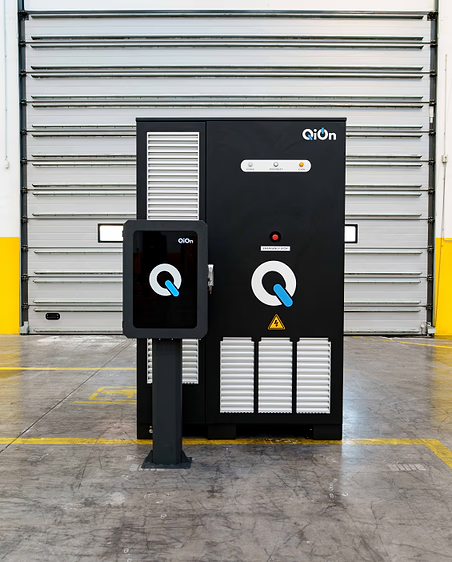
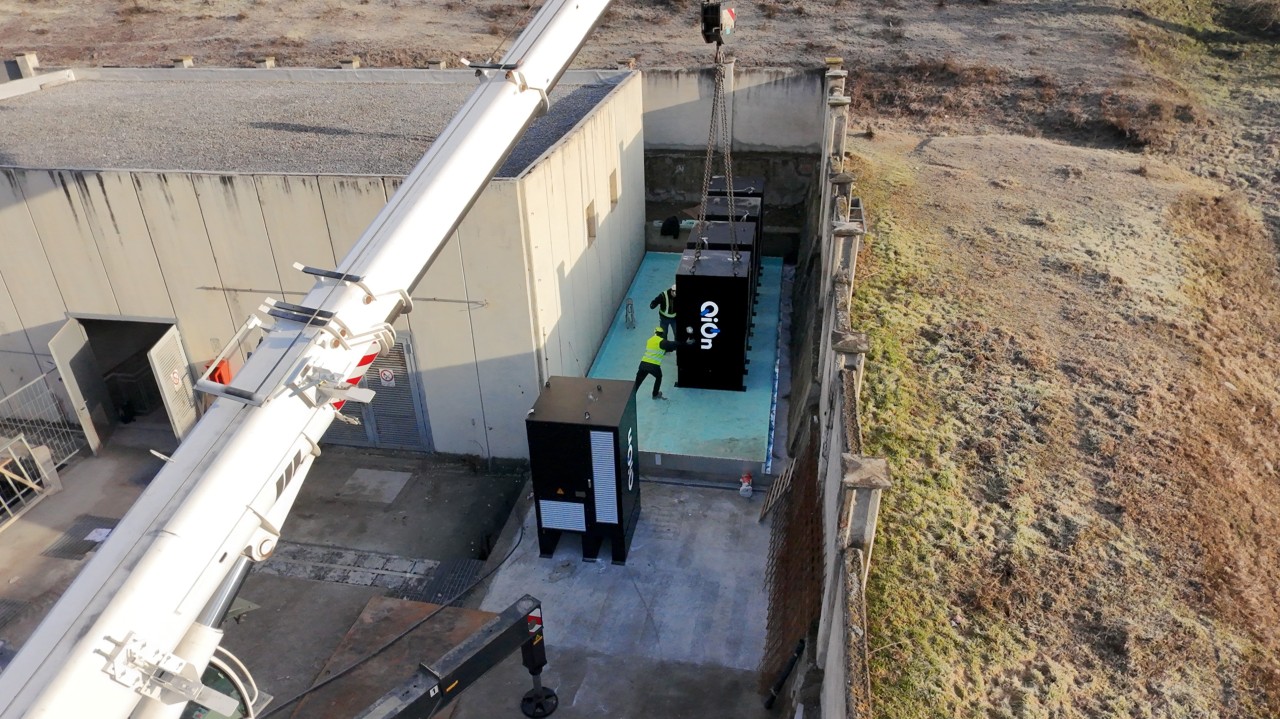
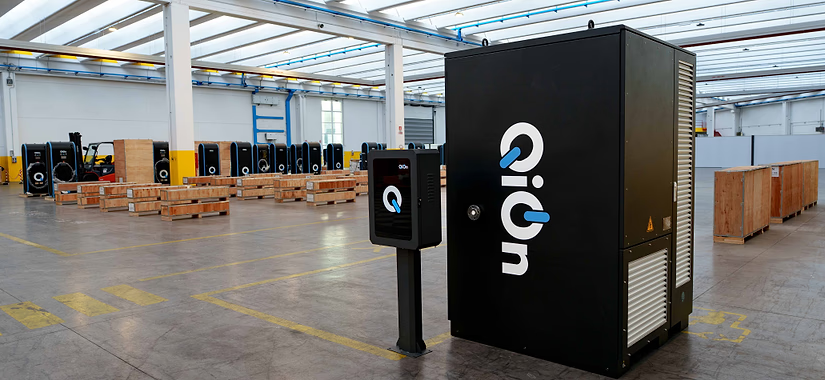
- Battery energy storage system (BESS): Provides instantaneous response and clean backup power with no on-site emissions. Sized by energy capacity (kWh) for runtime and power output (kW) for peak load. Can provide additional value through grid services during normal operation.
- Uninterruptible power supply (UPS): A battery-based device that provides continuous, conditioned power to connected equipment, eliminating micro-interruptions and voltage fluctuations even before a full outage occurs. Used for sensitive electronics, servers, and controls.
- Diesel or natural gas generator: Provides long-duration backup capacity when fueled. High runtime flexibility, but slow to start, produces on-site emissions, and requires fuel storage, regular testing, and maintenance.
- Energy management system (EMS) or controller: Manages dispatch priorities, monitors battery state of charge and generator status, coordinates hybrid system operation, and executes transfer and restoration sequences.
- Critical load panel: A dedicated electrical panel that receives backup power, containing only the loads that have been designated as essential. Separates critical from non-critical loads to reduce the required backup capacity.
- Fuel storage and supply infrastructure: For generator-based systems, on-site fuel tanks sized for the required runtime. Subject to permitting, inspection, and fuel quality maintenance requirements.
Benefits of a Backup Power System
- Operational continuity: Eliminates or reduces production losses, restart costs, and service interruptions caused by grid outages.
- Protection for sensitive equipment: UPS and battery systems provide conditioned power that protects servers, process controls, and precision manufacturing equipment from voltage sags, surges, and micro-interruptions that generators alone cannot prevent.
- Safety and compliance: Critical facilities including hospitals, emergency operations centers, data centers, and food handling operations have regulatory requirements for backup power that a properly designed system satisfies.
- Revenue generation during normal operation: NREL research confirms that battery-based backup systems can participate in demand response, peak shaving, and grid services programs during grid-connected hours, generating returns that offset capital cost.
- Fuel independence for battery systems: Battery-based systems eliminate on-site fuel storage requirements, fuel delivery logistics, and the operational complexity of maintaining diesel inventory at multiple sites.
- Scalability and modularity: Modern battery systems can be expanded by adding capacity modules, allowing facilities to start with a right-sized installation and grow as load requirements increase.
Limitations and Misconceptions
A common misconception is that any battery system automatically provides backup power. Most behind-the-meter battery systems installed for demand charge reduction or energy arbitrage are not configured for backup operation and will shut down when the grid goes down, just like a standard solar inverter. Backup capability requires specific configuration including a transfer switch, a battery inverter capable of island operation, and a properly designed critical load panel. Another misconception is that generators are more reliable than batteries because they can run indefinitely with fuel. In practice, generators that sit idle for extended periods are prone to starting failures when they are needed most. They require regular exercising, fuel testing, and maintenance. Battery systems, by contrast, are continuously active and require no startup sequence.
- Runtime limits for battery systems: Battery backup duration is limited by stored energy capacity. A system sized for a 4-hour outage provides no coverage for a 12-hour event unless the battery is paired with a generator or recharged from on-site generation.
- Capital cost of full-facility coverage: Backing up an entire facility requires significantly more battery capacity than protecting only critical loads. Most economic analyses focus backup investment on the highest-value loads rather than full-site coverage.
- Permitting and utility coordination: Battery systems configured for island operation must comply with interconnection requirements and may require utility approval. This can extend project timelines, particularly for first-of-type installations at a given utility.
- Generator emissions and noise: Diesel generators produce exhaust emissions and significant noise during operation, which may conflict with site environmental permits, zoning requirements, or operating conditions for sensitive manufacturing processes.
Real-World Examples and Use Cases
- Data centers and server infrastructure: Data centers operate with tiered backup power architecture combining UPS units for millisecond protection, batteries for short-duration ride-through, and generators for extended outages. The UPS bridges the gap between grid loss and generator startup, preventing any interruption to servers and networking equipment.
- Cold chain logistics and food processing: Refrigerated warehouses, food processing plants, and pharmaceutical storage facilities use backup power systems to protect temperature-controlled inventory. Battery systems are increasingly preferred over generators in food environments due to emissions and noise restrictions inside processing buildings.
- Military and government critical facilities: NREL microgrid resilience analysis documents how facilities with mission-critical power requirements are moving toward hybrid solar, battery, and generator configurations that reduce fuel consumption while extending outage coverage beyond what batteries alone can provide.
- Mining and remote industrial operations: Remote sites with no grid connection use battery-plus-generator hybrid systems as their primary power architecture. The battery handles variable load balancing and smooths generator output, while the generator handles baseload and recharging. This reduces generator runtime by 40 to 60 percent compared to generator-only operation, lowering fuel costs and maintenance frequency.
- EV fleet depots: Electrified vehicle depots introduce new power demand and new backup power requirements. Facilities that have invested in fleet electrification are increasingly adding battery storage to protect charging infrastructure from outages that would ground an entire fleet and to prevent the demand spikes that fleet charging creates from triggering power quality events at the site.
Frequently Asked Questions (FAQs)
What is the difference between a UPS and a battery backup system?
A UPS (uninterruptible power supply) is a specific class of battery-based device designed to provide continuous, conditioned power to connected equipment without any interruption, even for micro-events that last milliseconds. It is typically used for individual devices or small equipment clusters such as servers or process controllers. A battery backup system (BESS) is a larger-scale installation designed to power significant facility loads for minutes to hours during an outage. Both are battery-based, but they differ in scale, response architecture, and application.
What is the difference between a backup power system and a standby generator?
A standby generator is one component that can fulfill the backup power function, but it is not a complete backup power system on its own. A full backup power system includes the generator plus a transfer switch, fuel storage, monitoring, and in many designs a UPS or battery front-end to cover the 10 to 30 seconds the generator takes to start. A battery backup system can operate as a complete, self-contained backup solution without a generator for outages within its energy capacity.
How long can a battery backup system power a facility?
Runtime depends on the battery's energy capacity (kWh) and the facility's load during the outage. DOE guidance on on-site storage recommends sizing battery systems based on a load analysis that identifies critical versus non-critical loads and the required protection window. A facility that backs up only its most critical loads can achieve significantly longer runtime from the same battery capacity than one that backs up everything. Four to eight hours of critical load coverage is a common design target for battery-only systems.
Can a backup power system also reduce my energy bills?
NREL research confirms that battery systems deployed primarily for backup power can also generate value through peak demand shaving, time-of-use rate optimization, and demand response program participation during normal grid-connected operation. This dual-use capability is a key part of the business case for battery-based backup systems, since it means the asset is earning a return even during the majority of its life when no outage occurs.
What is the difference between a backup power system and a microgrid?
A backup power system is designed to sustain a defined set of critical loads during a grid outage, typically for a limited duration. A microgrid is a more complete local energy system with its own generation, storage, and controls that can operate indefinitely in island mode. Every microgrid provides backup power capability, but not every backup power system is a microgrid. The distinction is primarily about scope, autonomy, and whether the system includes on-site generation that can recharge the storage and sustain operations indefinitely.
Are there safety requirements for battery backup systems?
EPA guidance on battery energy storage systems outlines the key safety considerations for BESS installations, including fire suppression requirements, ventilation, thermal management, and incident response planning. Battery systems must comply with local fire codes, building codes, and utility interconnection standards. Facilities with BESS should work with their local authority having jurisdiction (AHJ) and utility early in the design process to understand permitting and safety requirements.
Can industrial facilities back up specific loads instead of the whole site?
Yes, and this is the standard approach for cost-effective backup power design. Critical load segregation, typically achieved through a dedicated critical load panel fed from the backup source, allows a facility to protect its highest-value processes at a fraction of the cost of full-site backup. Common critical loads include process control systems, refrigeration, server infrastructure, safety lighting, and communications equipment. Non-critical loads such as HVAC, lighting in non-essential areas, and general outlets are shed during backup operation.
How does a hybrid battery-plus-generator system work?
In a hybrid system, the battery handles the initial transition and powers the facility through short outages with no startup delay and no emissions. If the outage extends beyond the battery's standalone capacity, the EMS starts the generator, which takes over the primary load and simultaneously recharges the battery. This architecture reduces the frequency and duration of generator runtime by 40 to 60 percent compared to a generator-only system, significantly reducing fuel consumption, maintenance intervals, and on-site emissions while extending total backup duration beyond what either technology provides alone.
Related Terms
- Battery Energy Storage System (BESS)
- Uninterruptible Power Supply (UPS)
- Islanding
- Microgrid
- Energy Management System (EMS)
- Peak Shaving
- Demand Response (DR)
- Power Quality
Further Reading
- Uninterruptible Power Supplies U.S. Department of Energy, EERE Buildings
- Battery Storage for Resilience (NREL/TP-7A40-79850) NREL, 2021
- Valuing the Resilience Provided by Solar and Battery Energy Storage Systems (NREL/TP-6A20-70679) NREL, 2018
- On-Site Energy Storage Decision Guide DOE Better Buildings Solution Center, 2017
- Using Backup Generators U.S. Department of Energy, CESER
- Lower Battery Costs and High Value of Backup Power Drive Distributed Storage Deployment NREL, 2021
- Resilience and Economics of Microgrids with PV, Battery Storage, and Networked Diesel Generators (NREL/TP-5D00-78837) NREL, 2021
- Battery Energy Storage Systems: Main Considerations for Safe Installation and Incident Response U.S. Environmental Protection Agency