What is Islanding?
Islanding is the condition in which a section of the power system, containing both generation and load, continues to operate after disconnecting from the main utility grid. It can occur unintentionally during outages, creating safety and equipment risks, or be configured deliberately as a resilience strategy that keeps critical operations running when the grid fails.
Key Takeaways
- Islanding has two forms: unintentional (a safety hazard to be prevented) and intentional (a designed resilience capability).
- IEEE Standard 1547-2018 requires that DERs detect an unintentional island and cease energizing the grid within 2 seconds of island formation.
- Intentional islanding is the technical foundation of microgrid operation, enabling facilities to maintain power through utility outages without manual intervention.
- Battery storage is the most capable resource for sustaining an intentional island, providing frequency and voltage regulation with millisecond response times.
- Anti-islanding protection is a regulatory and safety requirement for all grid-tied inverters and must be validated at commissioning.
Why Islanding Matters
Islanding sits at the intersection of grid safety and energy resilience, and the same phenomenon that creates hazards in uncontrolled scenarios becomes a strategic capability when designed properly. For facility operators, energy managers, and grid planners, understanding the distinction between the two forms of islanding is foundational to any serious energy investment decision. From a safety perspective, unintentional islanding is one of the primary concerns regulators have as distributed generation proliferates across the grid. When a grid section disconnects due to a fault or planned switching, any DER still energizing that section creates live voltage on lines that utility crews may believe are de-energized. The result is a direct safety hazard for lineworkers and a liability for asset owners who have not configured protection correctly. From a resilience perspective, the same underlying capability is exactly what makes microgrids commercially valuable. Facilities that invest in intentional islanding can maintain operations through grid events that would otherwise halt production, compromise cold chain integrity, or trigger costly restart sequences. For energy-intensive operations in manufacturing, logistics, ports, and mining, controlled island capability translates directly into measurable cost avoidance. Battery storage systems, when paired with an energy management system (EMS), provide the enabling layer for intentional islanding. They respond within milliseconds to balance load and generation the moment the grid connection drops, a capability no rotating generation technology can match.
How Islanding Works, Step by Step
The mechanics differ significantly between the two forms of islanding, but both begin with the same condition: a distributed energy resource is operating in parallel with the main grid, and the grid connection is interrupted.
Unintentional Islanding
When a fault, equipment failure, or planned switching event causes a section of the distribution network to separate from the main grid, DERs such as solar inverters, wind turbines, or battery systems within that section may continue energizing the isolated segment. This is unintentional islanding. Modern inverters are required to detect this condition using passive and active monitoring techniques. Passive methods monitor grid voltage and frequency for deviations beyond normal bounds. Active methods introduce small perturbations to the system to verify whether the utility grid is still present and providing the reference signal. When an island is detected, the inverter must disconnect within 2 seconds under IEEE 1547-2018 requirements.
Intentional Islanding
In a designed microgrid system, islanding is an engineered capability, not a fault condition. The process follows a defined sequence:
- The microgrid controller monitors the point of common coupling (PCC) for grid disturbances or a pre-defined islanding trigger.
- When the trigger condition is met, the controller opens the grid interconnection switch, physically separating the microgrid from the utility.
- The battery storage system, previously operating in grid-following mode, transitions to grid-forming mode and takes over frequency and voltage regulation for the island.
- Generation sources within the island (solar, diesel, CHP, or other DERs) are dispatched by the controller to match local load in real time.
- When grid conditions normalize, the microgrid controller executes a re-synchronization sequence, matching frequency, phase angle, and voltage before reconnecting to the utility. The quality and speed of the transition to islanded operation depends heavily on the storage system and the controller. Battery-based systems execute a seamless transition in under 20 milliseconds, while systems relying on rotating generation typically require 10 to 30 seconds and produce a brief voltage interruption during startup.
Key Components of an Islanding System
- Grid interconnection switch: The physical device that separates the microgrid from the main utility circuit. Must be controllable by the EMS or protection relay and certified for make-before-break or break-before-make switching as required by the utility.
- Anti-islanding detection (passive and active): Built into grid-tied inverters; monitors frequency, voltage, and phase to detect loss of the utility reference signal and triggers automatic disconnection within the 2-second window required by IEEE 1547-2018.
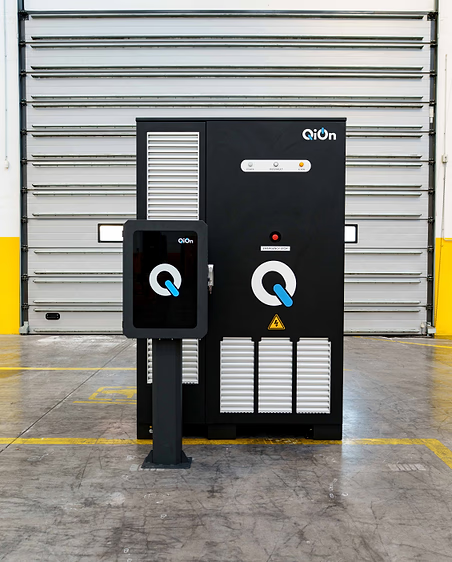
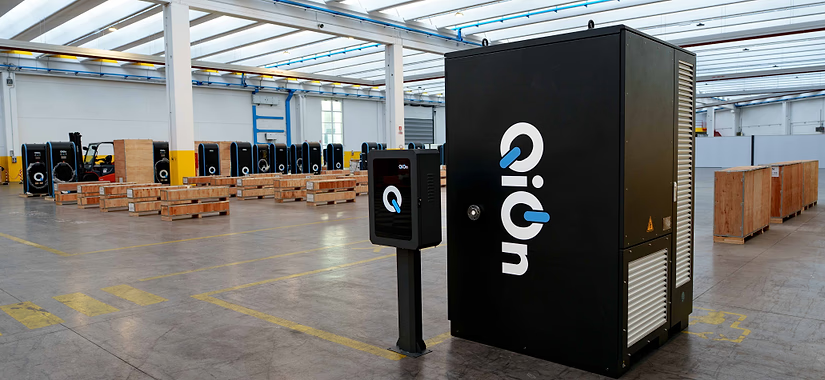
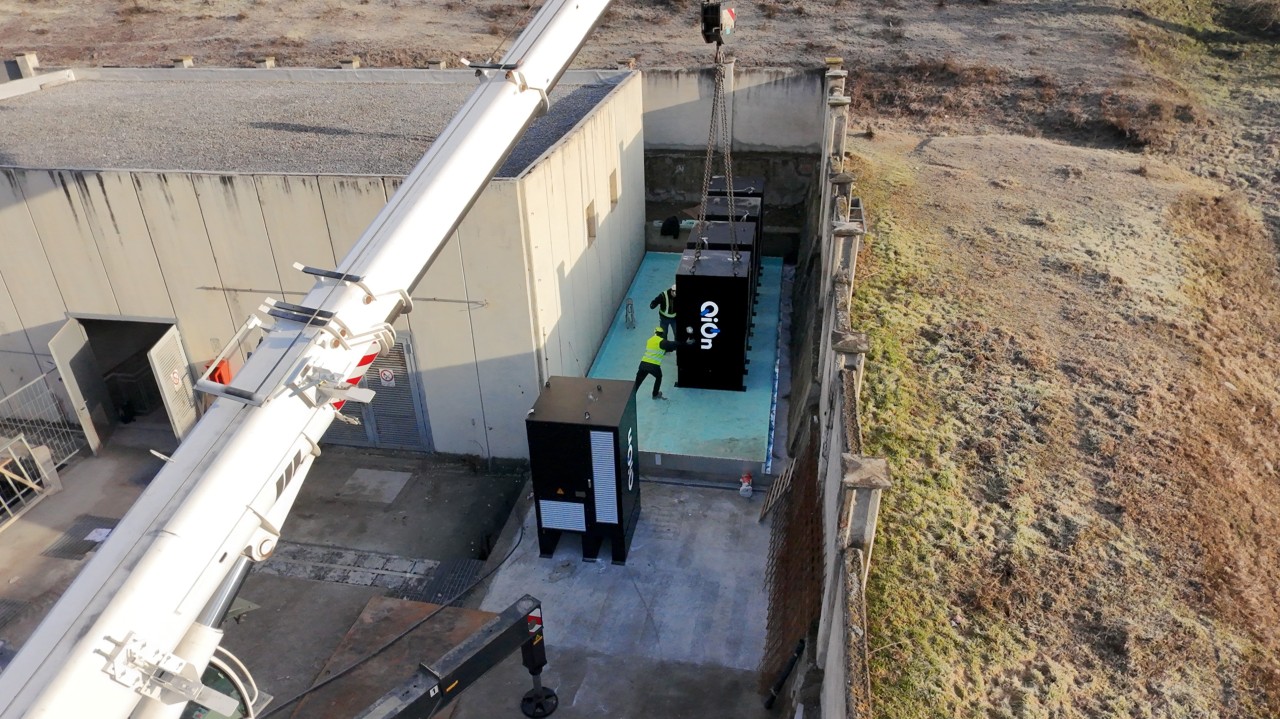
- Battery energy storage system (BESS): Provides the frequency and voltage reference in island mode. The most capable resource for seamless transitions and sustained islanded operation, with response times measured in milliseconds rather than seconds.
- Microgrid controller and EMS: Coordinates all generation and storage resources, manages the transition sequence, monitors power balance within the island, and executes re-synchronization when the grid is restored.
- Protection relays: Provide over/under-voltage and over/under-frequency protection for both the utility interconnection and internal island equipment, and ensure the system meets interconnection agreement requirements.
- Communications layer: Enables the controller to monitor utility grid status and coordinate with utility systems for planned islanding events, outage notifications, and restoration sequencing.
Benefits of Intentional Islanding
- Operational continuity during grid events: Critical processes remain powered through utility outages without manual intervention or the delay of diesel genset startup sequences.
- Cost avoidance from outage-related losses: Eliminates lost production, product spoilage, restart costs, and safety exposure associated with unplanned shutdowns. For continuous-process operations, a single avoided outage can justify years of storage capital cost.
- Seamless transition for sensitive loads: Battery-based islanding systems can transition in milliseconds, making the event invisible to process control systems, servers, and precision manufacturing equipment that cannot tolerate even brief voltage drops.
- Revenue generation during grid-connected hours: Assets sized for islanding capability can participate in capacity markets, demand response programs, and frequency regulation during normal operation, generating a return that offsets the capital invested in island capability.
- Infrastructure independence for remote and weak-grid sites: Facilities in areas with unreliable utility service can use intentional islanding as their primary power architecture, displacing diesel dependency and reducing fuel logistics costs.
Limitations and Misconceptions
A common misconception is that any battery system or solar installation provides automatic islanding capability. In practice, most grid-tied inverters are configured with anti-islanding protection enabled by default and will shut down when the grid goes down, by design. Achieving intentional islanding requires specific equipment, a dedicated microgrid controller, a controllable interconnection switch, and compliance with utility interconnection agreement requirements that must be reviewed and approved before commissioning. Another frequent misunderstanding is that islanding is primarily a technology question. In most markets, it is equally a regulatory and commercial question. Utilities have specific views on islanding-capable systems connected to their distribution networks, and the interconnection approval process for a facility with intentional islanding capability can be significantly more complex than for a standard behind-the-meter storage installation.
- Re-synchronization complexity: Reconnecting to the main grid after an island event requires precisely matching voltage, frequency, and phase angle. A poorly executed reconnection can cause equipment damage, a second disconnection event, or power quality problems for neighboring facilities.
- Load management requirements: Sustaining an island requires balancing generation and load in real time. Facilities with large, uncontrollable loads may need to shed non-critical systems during island mode to prevent frequency collapse when generation cannot keep pace with demand.
- Capital cost premium: The equipment required for intentional islanding capability, including the transfer switch, protection relay upgrades, and a battery system sized for islanded operation, adds cost beyond a standard storage installation. The economics typically require either a high cost of downtime or a combination of islanding plus grid service revenue to build the business case.
Real-World Examples and Use Cases
- Military installations: DOE Voices of Experience research documents how military sites treat intentional islanding capability as a core design requirement, where grid dependence represents a strategic vulnerability. Installations across the United States have deployed battery-backed microgrids that island during utility outages while maintaining full operational continuity for mission-critical systems.
- University and campus microgrids: Large campuses with combined heat and power (CHP) systems have operated as intentional islands for decades. Modern implementations add battery storage to manage the transient when switching from grid-following to island mode, eliminating the voltage dip that older rotating-machine architectures could not avoid.
- Continuous-process industrial facilities: Food processing, pharmaceutical production, and semiconductor manufacturing operations are investing in islanding capability to eliminate the product loss and restart costs that accompany even brief outages. For facilities with continuous-process lines, a 30-second interruption can trigger losses that exceed the annual cost of energy storage.
- Remote and off-grid operations: NREL analysis of remote microgrids documents the economics of replacing diesel generation with solar, battery storage, and islanded operation at mining, telecommunications, and infrastructure sites. In these applications, islanding is not a backup to grid power but the primary power architecture.
- Port and logistics operations: Ports with electrified cargo handling equipment and shore power facilities are deploying microgrid-backed islanding capability to protect against grid events that would halt vessel turnaround and trigger demurrage costs for commercial operators.
Frequently Asked Questions (FAQs)
What is the difference between islanding and a power outage?
A power outage means the grid has lost supply and a facility loses power entirely. Islanding means a section of the network, including the facility's own generation or storage, continues operating after disconnecting from the grid. In an unintentional island, the facility may not experience a power interruption at all, but utility safety protocols are compromised because lines that crews believe are de-energized are still live. In a designed intentional island, the facility remains powered using its own resources while the grid is down.
What is anti-islanding and why is it required?
Anti-islanding protection is the set of monitoring and detection functions built into grid-tied inverters that cause the inverter to disconnect when the utility grid is no longer present. It is required by IEEE 1547-2018 and by most utility interconnection agreements. Without it, an energized island creates a live-voltage hazard for utility workers performing line maintenance or switching operations, who may have no way of knowing the section is still powered from a local source.
Can a solar installation island during a grid outage?
A standard grid-tied solar inverter cannot island and will shut down automatically when the grid goes down, as required by anti-islanding rules. A solar-plus-storage system with a properly configured battery inverter, a transfer switch, and a controller can island, but this requires specific equipment and configuration that goes well beyond a standard solar installation. It must also be disclosed to and approved by the utility as part of the interconnection agreement.
What is the difference between islanding and a microgrid?
Islanding is the condition; a microgrid is the system designed to operate in that condition. A microgrid is a local energy system with its own generation, storage, and controls that can disconnect from the main grid and operate independently. Islanding is what happens when that disconnection occurs. Not every islanding event involves a microgrid, but every microgrid is specifically designed to execute intentional islanding safely, sustainably, and in compliance with utility requirements.
How fast does a battery storage system transition to island mode?
Modern battery storage systems with grid-forming inverters can complete the transition to islanded operation in under 20 milliseconds, which is fast enough to be imperceptible to most sensitive loads. This is the primary operational advantage of battery storage over diesel generators, which require 10 to 30 seconds to start and synchronize, causing a sustained voltage interruption that can affect process control systems, refrigeration, and server infrastructure.
Is intentional islanding allowed under utility interconnection agreements?
Rules vary by utility and jurisdiction. Many utilities permit intentional islanding but require the system to meet specific protection and transfer switch standards, and the islanding capability must be disclosed during the interconnection application process. Some utilities impose additional protection relay requirements or communication-based monitoring to verify grid status before permitting island operation. Early engagement with the local utility during project planning is essential to understand the permitting path and timeline.
Can industrial facilities implement limited islanding without a full microgrid?
Yes. A simplified approach, sometimes called a critical load island, uses a transfer switch, a battery system, and a basic controller to power a designated subset of critical loads during outages. This does not provide full facility coverage, but it protects the processes that matter most, such as servers, safety systems, process control equipment, or refrigeration, at significantly lower capital cost than a complete microgrid buildout. It is a practical entry point for facilities evaluating resilience investments.
What role does the EMS play in islanding?
The energy management system is the coordination layer that makes intentional islanding operationally reliable. It monitors the utility interconnection point, detects the conditions that trigger an island event, sequences the transfer switch operation and inverter mode transitions, manages the real-time balance between generation and load during island operation, and executes the re-synchronization when the grid is restored. Without an EMS, island mode requires constant manual oversight and is not commercially viable for facilities operating around the clock.
Related Terms
- Microgrid
- Battery Energy Storage System (BESS)
- Energy Management System (EMS)
- Distributed Energy Resources (DERs)
- Backup Power System
- Anti-Islanding Protection
- Grid Interconnection
- Demand Response (DR)
Further Reading
- Prevention of Unintentional Islands in Power Systems with Distributed Resources NREL, IEEE 1547 Resources
- Power Systems Engineering Center: Prevention of Unintentional Islands (NREL/TP-5D00-67185) NREL, 2016
- A Primer on Unintentional Islanding Protection (NREL/TP-5D00-77782) NREL, 2022
- Functional Technical Requirements for Intentional Islands NREL, IEEE 1547 Resources
- Islanding a Microgrid U.S. Department of Energy FEMP
- Voices of Experience: Microgrids for Resiliency U.S. Department of Energy, 2021
- Valuing Resilience Benefits of Microgrids (NREL/TP-6A20-85175) NREL, 2023
- Highlights of IEEE Standard 1547-2018 Implementation Considerations (NREL/TP-5D00-81028) NREL, 2021